Foundations Built for Load and Longevity
Structural concrete slab foundations throughout Sacramento and the surrounding areas provide reliable base support for warehouses, barns, workshops, and other structures that require long-term strength and stability.
Agricultural, storage, and commercial buildings depend on slab foundations that distribute weight evenly and remain stable under heavy equipment and inventory loads. Triple R Concrete Inc. pours structural slab foundations throughout Sacramento and the surrounding areas for projects ranging from warehouse floors to barn conversions and automotive shop builds on large residential and commercial properties. Proper forming, grading, and reinforcement ensure the foundation supports building longevity without cracking or settling under operational stress.
Foundation work begins with site grading to establish drainage patterns and prevent water from collecting beneath the slab. Reinforcement is designed based on load requirements—whether the floor will support stacked materials, vehicle traffic, or stationary machinery. Concrete thickness and mix specifications are determined by building type and usage intensity, with allowances for future equipment additions or layout changes.
Request a foundation estimate to review site conditions and discuss reinforcement options suited to your building's intended use.
What Proper Foundation Work Requires
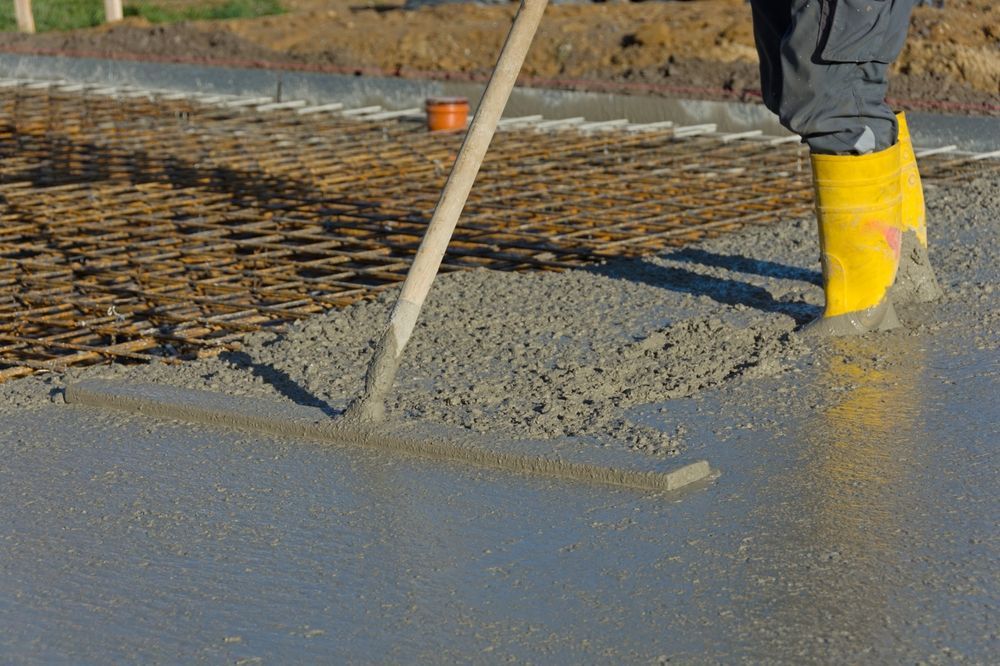
Structural slabs involve more than pouring concrete over dirt. The subgrade must be compacted to uniform density so settling doesn't create uneven floor sections that interfere with machinery placement or storage racking. Vapor barriers are installed to prevent moisture from wicking up through the concrete, which causes surface dusting and damages stored materials. Reinforcement placement is calculated to handle point loads from equipment and distributed loads from stacked inventory without flexing or developing stress cracks.
Once the foundation is complete, you have a flat, stable floor that supports building operations without ongoing leveling adjustments. The surface handles forklift traffic, rolling tool chests, and vehicle movement without rutting or surface breakdown. Large pours on open land sites require coordination of concrete delivery and placement timing to prevent cold joints where one section hardens before the next is placed, which would create weak lines across the floor.
Experience with agricultural and commercial projects means understanding load patterns that differ from residential work—concentrated weight from tractors and equipment rather than distributed loads from furniture and foot traffic. Foundation design accounts for these differences in both thickness and reinforcement density to prevent failures that disrupt operations or require costly repairs after buildings are occupied.
Questions Before Starting Your Project
Owners of agricultural, storage, and commercial properties throughout Sacramento and the surrounding areas often ask about load capacity, site preparation, and the factors that influence long-term foundation performance before beginning slab construction projects.
What load capacity does a structural slab need?
Capacity depends on whether the floor supports vehicle traffic, heavy machinery, or stacked materials, with reinforcement density and concrete thickness adjusted accordingly to prevent flexing or cracking under operational loads.
How does site grading affect foundation performance?
Proper grading directs water away from the building perimeter and prevents soil saturation beneath the slab, which causes uneven settling and stress cracks that compromise load distribution across the floor.
What happens during large concrete pours?
Delivery trucks arrive in coordinated sequence so concrete can be placed continuously across the entire slab area, preventing cold joints where separate sections meet and creating a monolithic floor with uniform strength throughout.
Why do some floors develop surface dusting?
Dusting occurs when moisture migrates up through the concrete due to missing or inadequate vapor barriers, bringing salts that weaken the surface and create powder under foot traffic or equipment movement.
When should foundations be thicker than standard?
Buildings with heavy equipment, multi-level storage racking, or frequent forklift traffic require increased thickness and reinforcement to distribute loads without developing cracks or uneven settlement over time.
Triple R Concrete Inc works with agricultural, commercial, and storage property owners who need structural foundations that support long-term building performance. Contact us to schedule a site evaluation and receive a foundation estimate based on your building's load requirements and usage plans.