
Surfaces Protected from Years of Exposure
Concrete sealing and staining services throughout Sacramento and the surrounding areas help protect driveways, patios, and other concrete surfaces from moisture exposure, traffic wear, and long-term surface deterioration.
Unsealed concrete absorbs water that carries salts, oils, and staining compounds into the porous surface, causing discoloration and accelerating deterioration. Triple R Concrete Inc. applies professional concrete sealing services throughout Sacramento and the surrounding areas for residential driveways, patios, and other high-traffic surfaces. Proper sealing helps protect concrete from seasonal rain, temperature fluctuations, moisture penetration, and premature surface wear that can cause untreated concrete to deteriorate over time. Sealing creates a barrier that prevents moisture penetration while allowing vapor to escape, preserving both appearance and structural integrity.
The process begins with surface cleaning to remove contaminants that would prevent sealer adhesion, followed by application of penetrating or film-forming sealers depending on the concrete's age and exposure. Finishing options include smooth trowel finishes for indoor areas, broom textures for traction on slopes and steps, or stamped and colored treatments that replicate stone or tile patterns for decorative applications.
Arrange an on-site evaluation to assess your concrete's current condition and determine which sealing approach matches your surface use and finish goals.
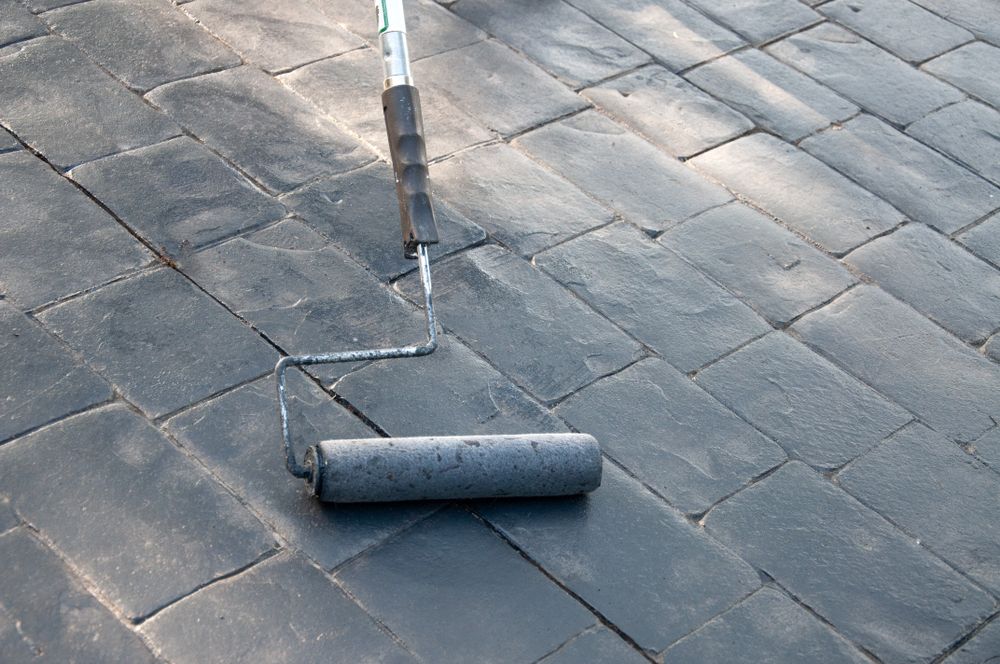
How Sealing Addresses Surface Deterioration
Sealer penetrates the concrete matrix or forms a protective film on the surface, depending on formulation. Penetrating sealers react chemically with the concrete to block pores from within, while topical sealers create a wear layer that resists abrasion and staining. Both sealing and staining treatments help reduce water absorption, which is one of the primary causes of scaling, spalling, and color fading in exterior concrete exposed to Sacramento’s seasonal rain and changing weather conditions.
After sealing, water beads on the surface instead of soaking in, and stains from oil or leaf tannins wash away more easily during routine cleaning. The concrete retains its original color rather than fading to a mottled gray, and surface dust stops forming as the sealer binds fine particles. Sealed driveways and patios require less frequent deep cleaning and show less wear in high-traffic zones near garage entries and walkways.
Resealing intervals depend on traffic levels and exposure, with driveways typically needing reapplication every two to three years and patios lasting longer between treatments. Decorative finishes require sealing to protect colored or stamped surfaces from UV fading and to maintain the contrast in textured patterns. Smooth finishes benefit from sealing that reduces dusting and makes routine sweeping more effective.
Common Questions About This Service
Clients usually want to know when sealing should happen, what changes they'll observe, and how long protection lasts before reapplication becomes necessary.
When should new concrete be sealed?
New pours need at least 28 days to cure fully before sealing, allowing internal moisture to escape and the surface to harden completely. Sealing too early traps moisture and causes the sealer to delaminate or create a cloudy appearance that requires removal and reapplication.
What is the difference between penetrating and topical sealers?
Penetrating sealers soak into the concrete and provide protection without changing surface appearance or adding a glossy film, while topical sealers sit on the surface and offer a wet look with higher gloss and more visible wear patterns over time.
What are the benefits of sealing concrete in Sacramento’s climate?
Sealing blocks water from entering the concrete, which prevents freeze-thaw cycling from breaking apart the surface and reduces salt intrusion that accelerates spalling. Properties in Herald experience enough seasonal moisture to justify sealing on all exterior flatwork exposed to weather.
Why do some sealed surfaces become slippery when wet?
High-gloss topical sealers reduce traction, especially on slopes and pool decks. Anti-slip additives can be mixed into sealer or broadcast onto wet sealer to create texture without eliminating the protective barrier.
What preparation does concrete need before sealing?
Surfaces must be cleaned of oil, dirt, efflorescence, and previous coatings that would block sealer penetration. Pressure washing, chemical etching, or grinding may be required depending on surface condition and the type of sealer being applied.
Triple R Concrete Inc. seals driveways, patios, and decorative concrete throughout Sacramento and the surrounding areas using products selected for the specific surface type and exposure conditions. Request a sealing consultation to evaluate your concrete’s age, finish, and long-term protection needs.