
Walls That Hold Slopes and Control Erosion
Retaining Walls Throughout Sacramento and the Surrounding Areas for Properties Managing Elevation Changes and Soil Stability
Uncontrolled slopes erode during heavy rain, undermining landscaping and creating drainage problems that affect foundations and hardscaping. Concrete retaining walls resist lateral soil pressure while allowing controlled drainage that prevents hydrostatic buildup behind the wall. Throughout Sacramento and the surrounding areas, many rural properties and landscaped yards feature significant grade changes that require reliable structural support. Triple R Concrete Inc. constructs retaining walls designed to manage slopes, improve soil stability, and integrate seamlessly with the overall property layout while minimizing long-term maintenance needs.
Wall construction begins with excavation and base preparation that extends below frost depth, followed by forming and reinforcement designed to handle the soil load specific to wall height and slope angle. Drainage systems are installed behind the wall to direct water away from the structure, preventing pressure that would cause leaning or failure over time. Walls are poured monolithically when possible to eliminate joints that shift or separate under load.
Arrange a site evaluation to assess slope conditions, soil type, and drainage patterns that will determine wall design and placement.
Why Proper Design Works for Structural Needs
Retaining walls function by resisting overturning and sliding forces generated by soil pressure, which increases with wall height and soil moisture content. The wall's footing extends below grade and is sized to distribute load across adequate soil area, while vertical reinforcement ties the footing to the wall stem to prevent rotation. Drainage behind the wall includes gravel backfill and perforated pipe that collects water and directs it to daylight or drainage systems, reducing hydrostatic pressure that would otherwise stress the wall.
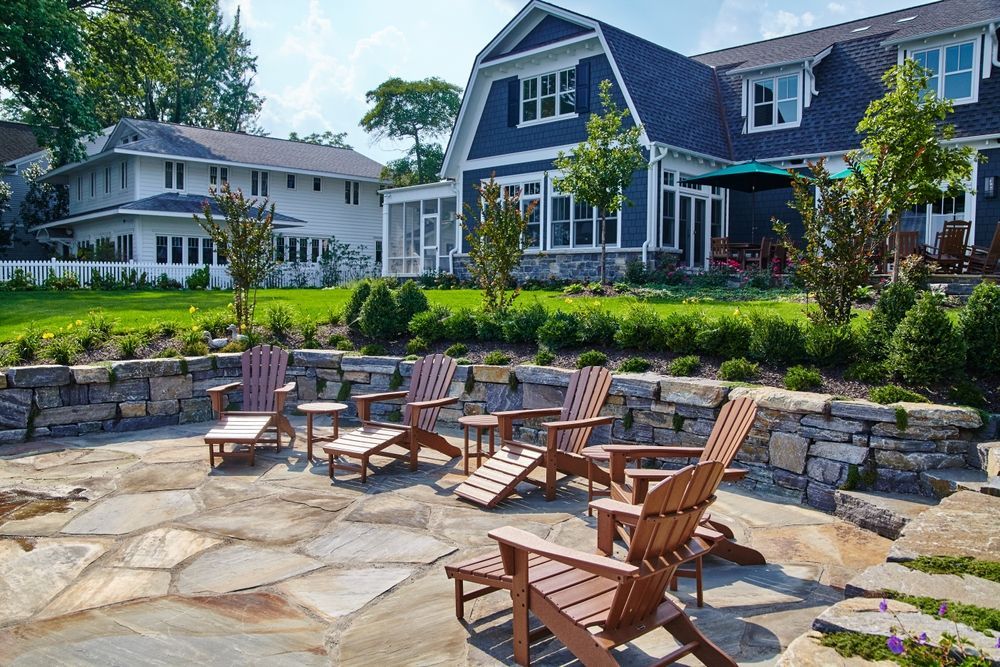
After construction, the wall holds its position without leaning or settling, and soil remains in place even during heavy rain events that would wash away unprotected slopes. Landscaping above and below the wall stays intact, and drainage no longer channels across vulnerable areas where erosion would undermine walkways or building foundations. The wall surface can be left smooth, finished with form liner textures, or faced with veneer materials that match surrounding hardscaping and architecture.
Wall height and reinforcement are calculated based on soil conditions and load, with taller walls requiring thicker sections and more substantial footings. Walls integrating into landscaping can include planters or tiered sections that reduce visual mass while maintaining structural function. Factors affecting design include proximity to structures, presence of surcharge loads like driveways or buildings above the wall, and long-term site drainage patterns.
What Property Owners Usually Ask
Retaining wall projects raise questions about design requirements, drainage management, and how walls integrate with existing site features and landscaping plans.
What determines how tall a retaining wall can be built?
Wall height is limited by soil bearing capacity, lateral soil pressure, and local building codes that may require engineering for walls exceeding certain heights. Taller walls need thicker sections, larger footings, and more reinforcement to resist the increased load.
How does drainage prevent retaining wall failure?
Drainage systems behind the wall collect groundwater and direct it away before hydrostatic pressure builds up. Without drainage, water-saturated soil exerts significantly more force on the wall, leading to leaning, cracking, or complete failure over time.
Why do some retaining walls lean or crack after installation?
Leaning typically results from inadequate footing size, missing drainage, or backfill that wasn't compacted properly. Cracking occurs when reinforcement is insufficient for the wall height or when the footing wasn't poured deep enough to resist frost heave in Herald's seasonal temperature range.
When should a retaining wall be integrated into landscaping plans?
Wall placement should be finalized before grading and planting, since the wall defines elevation transitions that affect drainage, irrigation, and access. Coordinating wall construction with overall site work prevents rework and ensures the wall functions as intended within the landscape design.
What maintenance do concrete retaining walls require?
Concrete walls need minimal maintenance beyond periodic inspection of drainage outlets and surface sealing if exposed to freeze-thaw cycles. Weep holes and drainage pipes should remain clear of debris to maintain proper function, and any cracking should be evaluated to determine if structural repair is necessary.
Triple R Concrete Inc. builds retaining walls throughout Sacramento and the surrounding areas for slope management, erosion control, and landscape integration on residential and rural properties. Contact us to discuss your site’s elevation challenges and schedule a consultation that includes drainage considerations and long-term structural planning.